
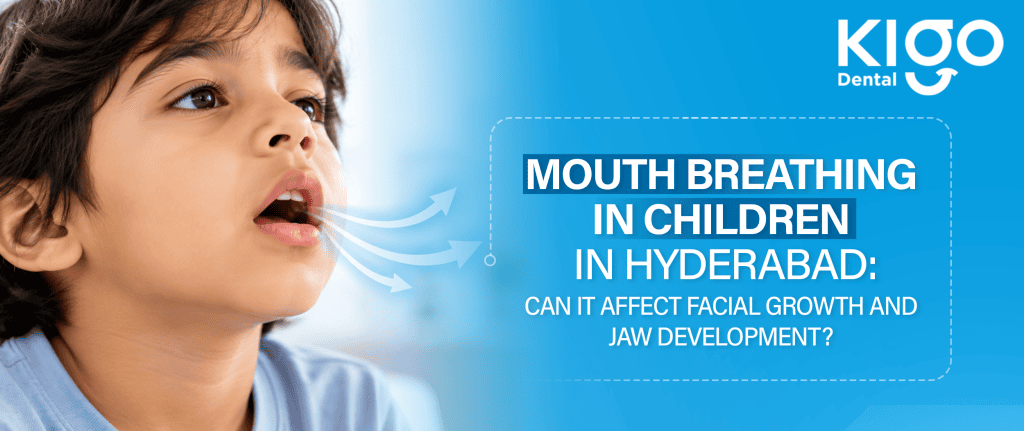
Children may sometimes breathe through their mouth when they have a blocked nose, cold, allergies, or other breathing difficulties. Occasional mouth breathing is usually not a major concern. However, if a child regularly breathes through the mouth, especially while sleeping, parents may want to understand whether it can affect their teeth, jaw, or facial development.
For parents in Hyderabad, noticing signs such as sleeping with the mouth open, snoring, dry mouth, or unusual breathing patterns can raise questions about a child’s oral development. While mouth breathing does not automatically cause facial or jaw problems, persistent mouth breathing may be associated with changes in oral posture and facial growth in some children.
What Is Mouth Breathing in Children?
Mouth breathing occurs when a child primarily breathes through the mouth instead of the nose. Nasal breathing is the normal way of breathing, but children may temporarily breathe through their mouths when they have a cold, nasal congestion, or other temporary problems.
However, when mouth breathing becomes a regular habit, it may affect the normal resting position of the lips, tongue, and jaw.
Some common reasons a child may develop persistent mouth breathing include:
- Nasal congestion
- Allergies
- Enlarged tissues in the upper airway
- Chronic nasal blockage
- Difficulty breathing comfortably through the nose
- Certain oral or facial conditions
Identifying the reason behind persistent mouth breathing is important before deciding whether any treatment is necessary.
Common Signs of Mouth Breathing
Mouth breathing can sometimes be difficult for parents to notice because it may occur mainly while the child is sleeping.
Some signs to watch for include:
- Sleeping with the mouth open
- Frequent snoring
- Dry mouth after waking
- Chapped lips
- Noisy breathing during sleep
- Drooling while sleeping
- Frequent nasal congestion
- Bad breath
- Difficulty breathing comfortably through the nose
- Restless sleep
- Daytime tiredness
These signs do not necessarily indicate a serious problem. However, if they occur regularly, parents may consider discussing them with a qualified healthcare professional or pediatric dentist.
Can Mouth Breathing Affect Facial Growth?
One of the most common concerns among parents is whether mouth breathing can change a child’s facial development.
Research has found an association between chronic mouth breathing and certain changes in facial growth, particularly when the habit continues during the growing years.
When a child breathes through the mouth, the normal resting position of the lips, tongue, and jaw may change. Instead of keeping the lips comfortably together, the child may frequently keep the mouth open. The tongue may also rest lower in the mouth.
Over time, these changes in oral posture may be associated with differences in the way the teeth and jaws develop in some children.
However, it is important to understand that facial growth is influenced by many factors, including genetics, overall health, muscle function, breathing patterns, and dental development. Mouth breathing should therefore not be considered the only cause of facial or jaw changes.
How Can Mouth Breathing Affect Jaw Development?
The tongue has an important role in normal oral development. During normal nasal breathing, the tongue generally rests against the roof of the mouth. With persistent mouth breathing, the tongue may rest lower in the mouth.
Changes in tongue posture, combined with altered lip and cheek muscle activity, may be associated with changes in dental arch development.
Some children may develop dental concerns such as:
- Narrow upper dental arch
- Crowded teeth
- Changes in the way the upper and lower teeth meet
- Increased overjet in some cases
- Open bite
- Crossbite
- Changes in jaw growth patterns
Not every child who breathes through their mouth will develop these problems. A professional dental evaluation is needed to determine whether mouth breathing is affecting the child’s teeth, bite, or jaw development.
Why Is Proper Oral Posture Important?
The position of the tongue, lips, and jaw contributes to normal oral function. When a child can breathe comfortably through the nose, the lips can usually remain together and the tongue can maintain a more natural resting position.
With persistent mouth breathing, the child may keep their mouth open for longer periods. This can change the resting position of the tongue and jaw.
Parents should therefore pay attention to persistent mouth breathing rather than treating it simply as a habit that a child should stop.
Mouth Breathing and Dental Problems
Persistent mouth breathing may also affect a child’s oral health.
When the mouth remains open frequently, saliva can evaporate more quickly, which may result in dry mouth. Saliva helps protect the teeth and maintain a healthy oral environment. Reduced moisture can make plaque accumulation and oral discomfort more likely.
Children who frequently breathe through their mouths may experience:
- Dry mouth
- Bad breath
- Increased plaque buildup
- Gum irritation
- Greater risk of cavities in some cases
Maintaining good oral hygiene and attending regular dental check-ups can help parents monitor their child’s oral health.
Does Every Mouth-Breathing Child Need Dental Treatment?
No. Mouth breathing does not automatically mean that a child needs braces or another dental treatment.
The first step is to understand whether the breathing pattern is temporary or persistent and whether there are any associated dental or facial changes.
A pediatric dentist can examine the child’s teeth, bite, jaw development, tongue posture, and overall oral health.
Depending on the child’s individual needs, the dentist may recommend:
- Regular monitoring of dental development
- Preventive dental care
- Assessment of tooth alignment
- Evaluation of the child’s bite
- Orthodontic assessment when necessary
- Guidance for maintaining healthy oral habits
Early evaluation does not necessarily mean immediate treatment. In many cases, monitoring the child’s growth and dental development may be all that is needed.
When Should Parents in Hyderabad Seek Dental Advice?
Parents may consider scheduling a dental evaluation if their child regularly breathes through the mouth, especially when the habit continues even when the child is otherwise well.
A dental consultation may be useful if the child also has:
- Persistent open-mouth posture
- Frequent snoring
- Dry mouth
- Noticeable crowding of teeth
- Difficulty closing the lips comfortably
- An unusual bite
- Teeth that do not meet properly
- Changes in the appearance of the developing jaw
A pediatric dentist can examine the child’s oral structures and determine whether there are any signs that require monitoring or further evaluation.
How Can Parents Help a Child With Mouth Breathing?
Parents should avoid forcing a child to keep their mouth closed without first understanding the reason for the breathing pattern.
Instead, parents can take a few simple steps.
1. Observe the Child’s Breathing
Notice whether mouth breathing happens only during a cold or whether it occurs regularly during the day and night.
2. Pay Attention to Sleeping Habits
Observe whether your child sleeps with their mouth open, snores frequently, or wakes up with a dry mouth.
3. Maintain Good Oral Hygiene
Help your child brush their teeth twice a day using an age-appropriate fluoride toothpaste. Regular dental visits are also important during the growing years.
4. Monitor Tooth Alignment
Watch for signs of crowding, gaps, crossbite, open bite, or difficulty biting and chewing.
5. Schedule Regular Dental Check-Ups
Routine dental examinations allow a pediatric dentist to monitor tooth eruption, jaw development, bite, and overall oral health as the child grows.
Why Early Dental Evaluation Can Be Helpful
Childhood is an important period for the development of the teeth and jaws. Because the face and jaws continue to grow throughout childhood, monitoring oral development can help identify potential concerns at an early stage.
Persistent mouth breathing does not necessarily mean that a child will develop abnormal facial growth or jaw problems. However, when it is accompanied by changes in oral posture, tooth alignment, or bite, a dental evaluation can help determine whether further attention is needed.
Parents should consider mouth breathing as a possible sign rather than a diagnosis by itself.
Final Thoughts
Mouth breathing in children can sometimes be temporary, particularly during colds or periods of nasal congestion. However, persistent mouth breathing may be associated with changes in oral posture, tooth alignment, and facial or jaw development in some children.
If your child frequently sleeps with their mouth open, snores, has a dry mouth, or shows changes in their bite or tooth alignment, consider scheduling a dental evaluation.
For parents looking for guidance on mouth breathing in children in Hyderabad, regular pediatric dental check-ups can help monitor your child’s teeth, bite, jaw development, and overall oral health during the growing years.
Get relief from chronic TMJ pain at Kigo Dental Clinic. Call +91 9998884398 to book your appointment today!