
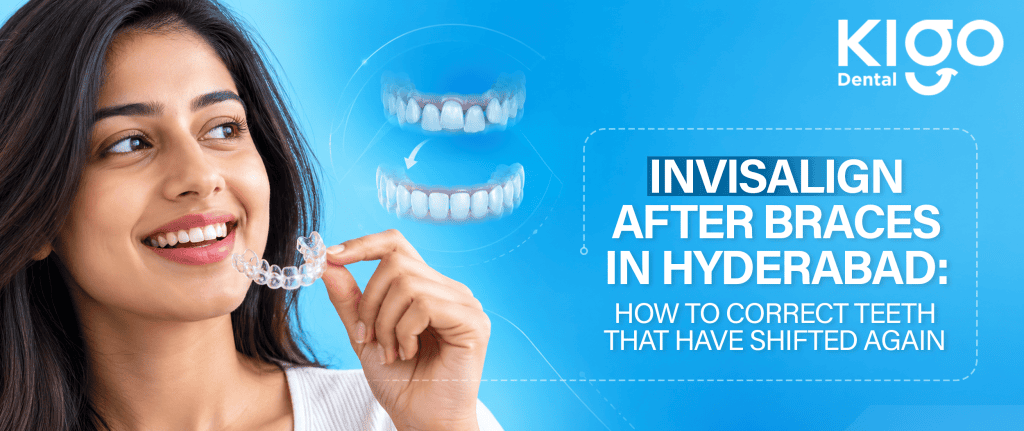
Many people choose braces to achieve straight teeth and a beautiful smile. However, even after completing orthodontic treatment, some people notice that their teeth gradually shift back to their previous positions. This is known as orthodontic relapse. It can happen months or even years after braces are removed, especially when retainers are not worn as recommended.
The good news is that Invisalign after braces in Hyderabad can be an effective option for correcting mild to moderate teeth shifting. Invisalign uses a series of clear, removable aligners to gradually move teeth into their desired positions without the appearance of traditional metal braces.
At Kigo Dental Clinic, patients can explore suitable options for correcting shifted teeth and improving their smiles. Understanding why teeth move after braces, how Invisalign works, and when to seek professional advice can help you make an informed decision about your dental care.
Why Do Teeth Shift After Braces?
Teeth are supported by the surrounding bone, gums, and periodontal ligaments. After braces are removed, these supporting structures need time to adapt to the new tooth positions. Without proper retention, teeth may gradually move.
Some common reasons for teeth shifting after braces include:
1. Not Wearing Retainers Regularly
Retainers help maintain the position of teeth after orthodontic treatment. If you stop wearing your retainer or do not follow your orthodontist’s instructions, your teeth may begin to move.
2. Natural Age-Related Changes
Teeth can change position naturally as people grow older. Crowding, particularly in the lower front teeth, may develop over time, even in individuals who previously had straight teeth.
3. Wisdom Teeth and Other Dental Changes
Changes in the mouth, including the eruption of wisdom teeth, may coincide with tooth movement. However, wisdom teeth are not the only or necessarily the main cause of shifting.
4. Changes in Your Bite
Changes in how the upper and lower teeth meet can contribute to unwanted tooth movement. Certain biting habits and other orthodontic factors may also affect tooth alignment.
5. Previous Orthodontic Issues
Some patients may experience relapse because their original dental concerns were complex or because their teeth have a natural tendency to move back toward their earlier positions.
Identifying the reason for shifting is important before choosing a suitable treatment.
What Is Invisalign After Braces?
Invisalign is an orthodontic system that uses transparent, custom-made plastic aligners to move teeth gradually. Instead of brackets and wires, patients wear a sequence of removable trays designed to guide teeth into planned positions.
Invisalign after braces is sometimes called Invisalign retreatment or orthodontic retreatment with clear aligners.
It may be suitable for people who have experienced:
- Mild to moderate crowding after braces
- Small gaps between previously aligned teeth
- Slightly rotated teeth
- Minor changes in the upper or lower front teeth
- Relapse caused by inconsistent retainer use, depending on the current alignment
The suitability of Invisalign depends on the amount and type of tooth movement required. More complex cases may need a different orthodontic approach.
How Does Invisalign Correct Teeth That Have Shifted Again?
Invisalign treatment involves several steps to assess tooth alignment and plan the necessary corrections.
Step 1: Dental Consultation
The first step is to visit a qualified dental professional for an examination. The dentist or orthodontist evaluates your current tooth positions, bite, gum health, and previous orthodontic treatment.
At Kigo Dental Clinic, you can discuss your concerns about teeth shifting and explore the treatment options appropriate for your dental condition.
Step 2: Digital Scanning and Treatment Planning
A digital scan or other suitable dental records may be used to assess your teeth. The clinician develops a treatment plan based on the movements required to improve alignment.
The plan helps determine whether clear aligners can address your concerns effectively.
Step 3: Custom-Made Clear Aligners
A series of custom-made aligners is prepared according to the treatment plan. Each aligner applies controlled pressure to guide specific teeth gradually toward their planned positions.
Because the aligners are transparent, many patients appreciate that they are less noticeable than traditional braces.
Step 4: Wearing the Aligners
Patients generally need to wear their aligners for around 20–22 hours per day, following their clinician’s instructions. Aligners are removed for eating, drinking anything other than water, and cleaning the teeth.
Consistent wear is essential for achieving the planned results.
Step 5: Follow-Up Appointments
Regular dental appointments help the clinician monitor progress and identify any problems. Additional adjustments or refinements may be necessary if the teeth do not move exactly as planned.
Step 6: Retainers After Treatment
Once the teeth reach their desired positions, retainers are usually needed to maintain the results. Wearing retainers according to professional instructions helps reduce the risk of future relapse.
Benefits of Invisalign After Braces
For suitable candidates, Invisalign can offer several advantages.
Nearly Invisible Appearance
The clear aligners are discreet, making them appealing to adults and working professionals who prefer a less noticeable orthodontic option.
Comfortable and Removable
Invisalign aligners can be removed when eating and brushing. This makes daily oral hygiene and meal planning more convenient than with fixed braces.
Easier Oral Hygiene
Since the aligners are removable, patients can brush and floss normally. Good oral hygiene remains important throughout treatment.
Customised Treatment
Each aligner series is designed according to the patient’s dental condition and treatment goals.
Suitable for Certain Relapse Cases
People with mild or moderate tooth movement after braces may be able to correct their alignment without undergoing another full course of traditional braces. However, suitability must be determined through a professional assessment.
Invisalign vs. Braces for Teeth That Have Shifted
Both clear aligners and traditional braces can correct tooth misalignment, but the right option depends on the complexity of the case.
Invisalign may be suitable for patients who want a discreet, removable solution for selected alignment problems.
Traditional braces may be preferable when more complex tooth movements or specific bite corrections are required.
Invisalign also requires discipline because the aligners must be worn consistently. Fixed braces remain attached to the teeth and do not depend on the patient remembering to put them back in.
A dental professional can explain the benefits and limitations of each option based on your needs.
How Long Does Invisalign Take After Braces?
The duration of Invisalign retreatment varies according to the degree of tooth shifting, the type of movement required, and how consistently the aligners are worn.
Minor alignment problems may require only a few months, while more complicated cases can take longer. Some patients may need additional aligners to achieve the planned results.
During your consultation, your dentist or orthodontist can provide a more realistic estimate based on your individual condition. Treatment duration should not be determined solely by how much the teeth appear to have shifted.
How Much Does Invisalign After Braces Cost in Hyderabad?
The cost of Invisalign after braces in Hyderabad depends on several factors, including:
- The complexity of the alignment problem
- The number of aligners required
- The estimated treatment duration
- The need for additional refinements
- Consultation, diagnostic records, and retainer costs
Minor relapse cases may involve a different treatment plan from cases requiring extensive correction. For this reason, it is best to obtain a personalised estimate after a dental examination.
Contact Kigo Dental Clinic to discuss your concerns and ask about the treatment options and costs applicable to your case.
How to Prevent Teeth from Shifting Again After Invisalign
Correcting shifted teeth is only part of maintaining a straight smile. Retention is essential after orthodontic treatment.
Follow these recommendations to help protect your results:
- Wear retainers regularly: Follow your dentist’s instructions regarding when and how long to wear them.
- Attend follow-up appointments: Regular reviews help identify unwanted tooth movement early.
- Maintain oral hygiene: Brush twice daily and floss regularly to support healthy teeth and gums.
- Do not force an old retainer: If your retainer feels very tight, causes pain, or no longer fits, consult your dentist rather than forcing it into place.
- Seek advice early: If you notice gaps, crowding, or changes in your bite, arrange a dental assessment before the movement progresses.
Even after successful Invisalign treatment, ongoing retention may be necessary to maintain alignment over the long term.
Why Choose Kigo Dental Clinic?
Choosing the right dental provider is an important step when considering orthodontic retreatment. Patients should look for a clinic that carefully evaluates their teeth, explains available options, and provides a treatment plan suited to their dental needs.
At Kigo Dental Clinic, you can discuss concerns about teeth that have shifted after braces and learn whether Invisalign or another orthodontic option may be appropriate.
A proper assessment helps determine the expected treatment duration, potential limitations, and the importance of retainers after correction.
Before starting treatment, ask about the proposed plan, follow-up appointments, overall costs, and long-term retention requirements.
Final Thoughts
Teeth shifting after braces can be frustrating, especially when you have already invested time and effort in achieving a straight smile. Fortunately, Invisalign after braces in Hyderabad may offer a discreet and convenient way to correct certain types of orthodontic relapse.
The most important steps are identifying why your teeth have shifted, selecting an appropriate treatment, and following professional instructions throughout the process. Wearing retainers consistently after treatment is equally important for maintaining your results.
Contact Kigo Dental Clinic at +91 9998884398 to learn more about Invisalign after braces and book your appointment.