
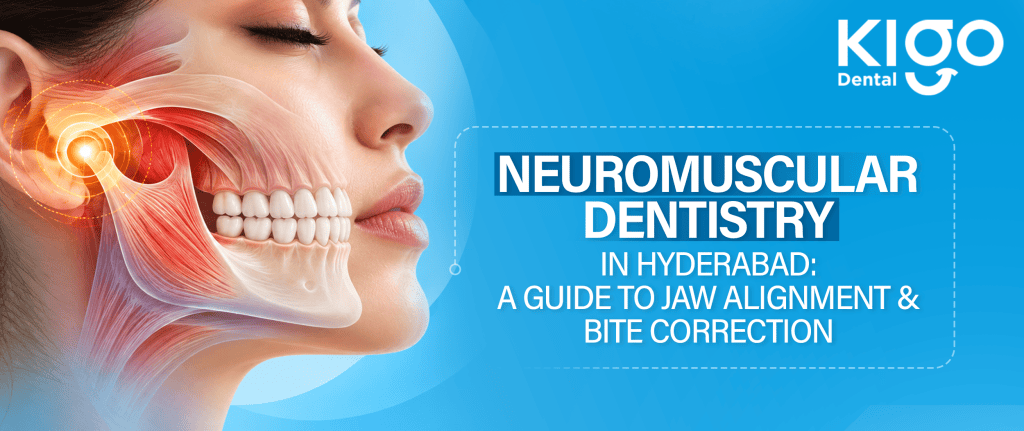
Neuromuscular dentistry focuses on the relationship between the teeth, jaw joints, and muscles that help us chew, speak, and open and close our mouths. When these structures do not work together comfortably, a person may experience jaw pain, clicking sounds, difficulty chewing, or other symptoms.
If you are looking for neuromuscular dentistry in Hyderabad, understanding the causes of jaw discomfort and bite problems can help you make informed decisions about dental care. Dr. Kishor Govardhan at Kigo Dental, Hyderabad, provides dental care with attention to jaw alignment, bite function, and individual patient needs.
What Is Neuromuscular Dentistry?
Neuromuscular dentistry is an approach to evaluating how the teeth, jaw muscles, and temporomandibular joints (TMJ) work together. The TMJ connects the lower jaw to the skull and helps you open and close your mouth.
A balanced bite allows the upper and lower teeth to meet comfortably during chewing. If the bite is uneven or the jaw muscles are strained, some people may experience discomfort or difficulty with normal jaw movements.
Neuromuscular assessment looks beyond the position of the teeth alone. It considers jaw movement, muscle function, the bite, and symptoms to help identify possible causes of discomfort.
The right treatment depends on the patient’s condition, examination findings, and dental needs.
Understanding Jaw Alignment and Bite Problems
Jaw alignment refers to how the upper and lower jaws relate to each other when the mouth is closed and during movement. Bite alignment, also called occlusion, describes how the upper and lower teeth meet.
When the teeth do not fit together properly, a person may have a bite problem called malocclusion. It can develop due to several reasons, including genetics, differences in jaw growth, missing teeth, or changes in tooth position.
Some common bite problems include:
- Overbite: The upper front teeth overlap the lower front teeth more than expected.
- Underbite: The lower front teeth sit in front of the upper front teeth.
- Crossbite: Some upper teeth bite inside the lower teeth.
- Open bite: The upper and lower teeth do not meet in certain areas when the mouth is closed.
- Uneven bite: The teeth meet unevenly, which may affect chewing comfort.
Not every bite difference requires treatment. A dentist can assess whether the bite problem affects oral health, function, comfort, or appearance.
Common Signs That You May Need a Jaw Assessment
Jaw and bite problems can cause different symptoms. Some people notice discomfort while eating, while others experience clicking sounds or tightness around the jaw.
Watch for the following signs:
1. Jaw Pain or Tenderness
Pain around the jaw joint, cheeks, or temples may be related to muscle strain or a temporomandibular disorder. A dental assessment can help determine whether the symptoms are associated with the teeth, jaw muscles, or joints.
2. Clicking or Popping Sounds
Some people hear clicking or popping sounds when opening or closing their mouths. Clicking without pain or limited movement does not always require treatment. However, painful clicking or a jaw that locks should be evaluated.
3. Difficulty Chewing
If your teeth do not meet comfortably, chewing may feel difficult or uneven. Pain while eating hard foods can also indicate a dental or jaw joint problem.
4. Teeth Grinding or Clenching
Grinding or clenching the teeth, particularly during sleep, can contribute to tooth wear, muscle soreness, and jaw discomfort. Stress, sleep-related factors, and other conditions may also play a role.
5. Frequent Headaches or Facial Muscle Pain
Some people with jaw muscle problems experience pain around the temples or face. However, headaches have many possible causes, so they should not automatically be attributed to bite alignment.
If these symptoms continue or affect your daily activities, consult a qualified dental professional for an appropriate evaluation.
What Causes Jaw Alignment Problems?
Jaw alignment and bite problems can develop for several reasons.
Genetics and jaw development: The size and position of the upper and lower jaws can influence how the teeth fit together.
Tooth loss: Missing teeth may allow nearby teeth to shift, changing the way the bite comes together.
Teeth grinding: Frequent grinding can wear down teeth and contribute to muscle discomfort.
Tooth position: Crowded, rotated, or protruding teeth may affect how the upper and lower teeth meet.
Jaw joint conditions: Problems involving the TMJ can cause pain, clicking, stiffness, or restricted movement.
Previous dental work or orthodontic changes: Changes in the teeth or bite may sometimes be associated with new discomfort and should be assessed individually.
Identifying the cause is important because different conditions require different treatments. Jaw pain does not always mean that the bite needs correction.
How Is Neuromuscular Dentistry Evaluated?
If you visit a dentist for jaw pain or bite correction in Hyderabad, the assessment may involve several steps.
1. Dental and Medical History
The dentist may ask about your symptoms, when they started, whether the pain occurs during chewing, and whether you grind or clench your teeth. Your medical history and previous dental treatments may also be relevant.
2. Examination of the Jaw and Teeth
The dentist checks your teeth, bite, jaw movements, and the muscles around the jaw. They may assess whether opening the mouth causes pain, clicking, or restricted movement.
3. Bite and Jaw Function Assessment
The dentist evaluates how the upper and lower teeth meet and whether the bite may be contributing to your symptoms. Additional tests may be considered when clinically appropriate.
4. Imaging or Other Diagnostic Tests
Dental X-rays, other imaging, or specialist investigations may be recommended depending on the suspected problem. Not every patient needs advanced imaging or electronic muscle testing.
After the assessment, the dentist can explain the likely cause of the symptoms and discuss suitable treatment options.
Treatment Options for Jaw Alignment and Bite Correction
There is no single treatment that works for every jaw or bite problem. Treatment should be based on an accurate diagnosis and the patient’s individual needs.
1. Oral Appliances or Splints
A dentist may recommend a suitable oral appliance for certain jaw muscle or joint conditions. Depending on the appliance and diagnosis, it may help protect the teeth from grinding or manage some symptoms.
A splint should be professionally assessed and monitored. It does not permanently correct every bite problem, and some appliances can change the bite if used inappropriately.
2. Orthodontic Treatment
Braces or clear aligners may help correct tooth-position problems and selected bite issues. The type and duration of treatment depend on the complexity of the case.
Orthodontic treatment should be planned after examining the teeth, jaw relationship, and overall oral health.
3. Jaw Exercises and Physiotherapy
For certain temporomandibular disorders, a dentist or qualified physiotherapist may recommend specific exercises, stretching, or other conservative therapies. These methods aim to improve comfortable movement and reduce muscle tension.
Exercises should be selected according to the diagnosis rather than performed without guidance.
4. Managing Teeth Grinding
If grinding or clenching is contributing to tooth damage or jaw discomfort, the dentist may recommend protective measures and strategies to manage contributing factors.
5. Restorative Dental Treatment
In selected cases, dental restorations may be needed to repair damaged or worn teeth. Permanent bite alterations should be considered carefully and only when there is a clear clinical reason.
Neuromuscular dentistry does not guarantee pain relief or require every patient to undergo bite reconstruction. Conservative treatment is often considered first when appropriate.
Benefits of Seeking Professional Jaw and Bite Evaluation
A proper dental evaluation can help patients understand their symptoms and choose an appropriate treatment plan.
Potential benefits include:
- Identifying possible causes of jaw discomfort.
- Evaluating how the teeth meet during chewing.
- Detecting signs of tooth wear caused by grinding.
- Improving chewing comfort when a treatable problem is identified.
- Receiving personalised guidance about appliances, exercises, or orthodontic treatment.
- Avoiding unnecessary or unsuitable dental procedures.
Results vary according to the underlying condition. Evidence supporting specific neuromuscular techniques differs, and claims that bite correction will automatically resolve headaches, neck pain, breathing problems, or posture issues should be approached cautiously.
Neuromuscular Dentistry in Hyderabad: Consult Dr. Kishor Govardhan
If you are experiencing jaw pain, an uncomfortable bite, difficulty chewing, or concerns about jaw alignment, consider arranging a dental assessment to understand the cause of your symptoms.
Dr. Kishor Govardhan at Kigo Dental, Hyderabad, can be considered for a consultation about dental alignment and jaw-related concerns. The appropriate assessment and treatment depend on your symptoms and clinical findings.
During your appointment, explain when the discomfort occurs, whether your jaw clicks or locks, and whether you have noticed tooth grinding or changes in your bite. This information can help the dentist evaluate your condition and discuss suitable options.
Choose a treatment plan based on a clear diagnosis, expected benefits, risks, and available alternatives. Avoid irreversible bite changes without a thorough clinical explanation and, when appropriate, a second opinion.
Final Thoughts
Neuromuscular dentistry in Hyderabad offers an approach to understanding the relationship between the teeth, jaw muscles, and jaw joints. Jaw pain, clicking, grinding, and uneven tooth contact can have different causes, so an accurate assessment is essential before beginning treatment.
Whether you need help managing jaw discomfort or correcting a bite problem, Dr. Kishor Govardhan at Kigo Dental can be a point of contact for discussing your dental concerns. A personalised treatment plan can help you understand your options and work towards better oral function and comfort.
Frequently Asked Questions
1. What is neuromuscular dentistry?
Neuromuscular dentistry evaluates how the teeth, jaw muscles, and jaw joints work together to support comfortable jaw function.
2. Can neuromuscular dentistry help with jaw pain?
It may help identify and manage certain causes of jaw discomfort. Results depend on the diagnosis, and not all jaw pain is caused by bite alignment.
3. Does an uneven bite always require treatment?
No. Treatment may be recommended when the bite problem affects chewing, oral health, comfort, or function.
4. Is neuromuscular dentistry the same as orthodontic treatment?
No. Orthodontics focuses on correcting tooth position and certain jaw-related bite problems. Neuromuscular dentistry places additional emphasis on the relationship between the teeth, muscles, and jaw joints.
5. Who can I consult for jaw alignment concerns in Hyderabad?
You can contact Kigo Dental in Hyderabad to enquire about a consultation with Dr. Kishor Govardhan for your dental and jaw-related concerns. The dentist can assess your symptoms and advise whether further evaluation or treatment is appropriate.
For Neuromuscular Dentistry in Hyderabad, consult Kigo Dental Clinic for jaw alignment and bite correction. Call +91 99988 84398 today.