
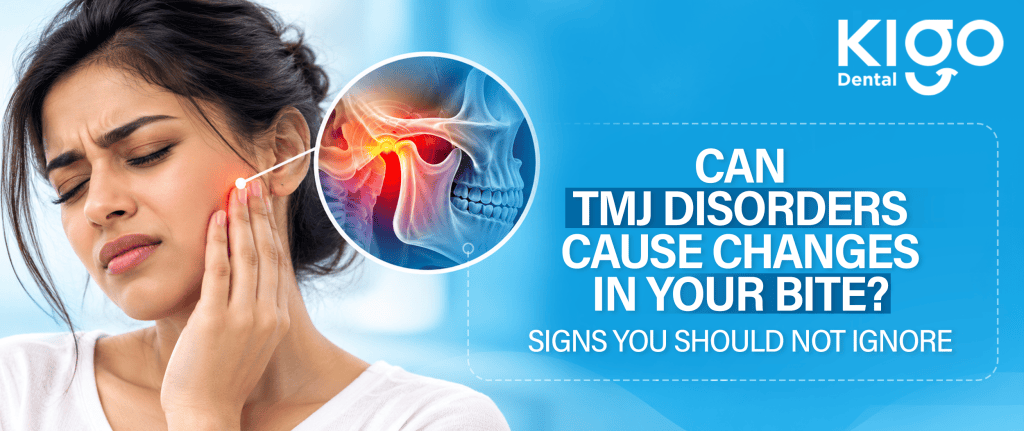
Have you noticed that your upper and lower teeth no longer fit together comfortably when you close your mouth? Do you experience jaw pain, clicking sounds, or difficulty chewing your food? These symptoms may be associated with temporomandibular joint (TMJ) disorders, which affect the joints and muscles responsible for jaw movement.
The temporomandibular joints connect your lower jaw to your skull and help you speak, chew, yawn, and open and close your mouth. When these joints or the surrounding muscles are affected, you may experience discomfort and changes in how your teeth come together.
Can TMJ disorders cause changes in your bite? Yes, some TMJ disorders can be associated with changes in the way your upper and lower teeth fit together. However, bite changes can also result from other dental or jaw conditions, so a proper examination is important.
What Are TMJ Disorders?
TMJ disorders, also called temporomandibular disorders (TMDs), refer to conditions affecting the jaw joints, chewing muscles, and surrounding tissues. These structures work together to allow smooth jaw movement.
When a problem affects the joints or muscles, it can lead to pain, stiffness, restricted movement, and difficulty chewing.
Common symptoms of TMJ disorders include:
- Pain around the jaw joints.
- Clicking or popping sounds when opening or closing the mouth.
- Difficulty opening the mouth fully.
- Jaw stiffness or locking.
- Pain while chewing.
- Headaches or facial discomfort.
- A noticeable change in how the teeth fit together.
Not everyone with TMJ disorders experiences all these symptoms. Some people have occasional discomfort, while others experience persistent pain that affects their daily activities.
Can TMJ Disorders Change the Way Your Teeth Fit Together?
Yes, a TMJ disorder can be associated with a change in your bite. The jaw joints, chewing muscles, and teeth work together to maintain comfortable jaw movement and tooth contact.
When the joint or surrounding muscles are affected, jaw movement may become restricted or uncomfortable. This can make your teeth feel as though they meet differently when you close your mouth.
For example, you might notice that one side of your teeth touches before the other or that your usual bite feels uneven.
However, TMJ disorders do not always cause permanent changes in your bite, and not every bite change indicates a TMJ problem. Dental issues, tooth wear, missing teeth, jaw injuries, and other conditions can also affect how your teeth meet.
Research does not establish that a misaligned bite is a general cause of TMJ disorders. Therefore, identifying the underlying reason for a bite change is essential before choosing treatment.
7 Signs of TMJ Disorders You Should Not Ignore
Recognising the warning signs early can help you seek appropriate care and prevent unnecessary discomfort.
1. Your Teeth Feel Different When You Bite
One of the noticeable symptoms associated with TMJ disorders is a change in how your upper and lower teeth fit together.
You may feel that your teeth no longer meet in their usual position or that one side of your mouth makes contact before the other.
This sensation can occur alongside changes in jaw movement. However, it can also have other causes, so a dental examination is necessary to determine the reason.
2. Jaw Pain While Chewing
Do you experience pain around your jaw when eating hard foods or chewing for an extended period?
Jaw pain is a common symptom of TMJ disorders. The chewing muscles and jaw joints may become painful or tender, making everyday activities uncomfortable.
If chewing causes persistent pain, consider temporarily choosing softer foods and avoiding activities that place additional strain on your jaw.
3. Clicking or Popping Sounds in the Jaw
Some people hear clicking, popping, or grinding sounds when opening or closing their mouths.
These sounds may occur because of movement within the jaw joint. However, clicking without pain or restricted movement is common and does not necessarily indicate a disorder requiring treatment.
If the sounds are accompanied by pain, locking, or a change in your bite, consult a qualified dental professional.
4. Difficulty Opening or Closing Your Mouth
Another possible sign of TMJ dysfunction is difficulty moving your jaw through its normal range of motion.
You may notice stiffness when yawning, eating, or speaking. In some cases, the jaw may temporarily lock or become difficult to open fully.
Restricted movement can affect the way your teeth come together and make eating uncomfortable.
If your jaw becomes locked or you cannot open your mouth normally, seek prompt professional assessment.
5. Uneven Pressure on Your Teeth
When you bite down, your teeth should come together in a way that feels comfortable and functional.
If you notice that one side seems to carry more pressure than the other, it is worth having the problem assessed.
Uneven tooth contact may be associated with changes in jaw movement, but it can also result from dental restorations, tooth damage, or other bite-related problems.
Avoid trying to correct your bite yourself. A dentist can examine your teeth and jaw to identify the possible cause.
6. Frequent Headaches or Facial Pain
TMJ disorders can cause pain in the muscles around the jaw, face, and temples. Some people also experience headaches or discomfort extending towards the neck.
These symptoms may become more noticeable after prolonged chewing, clenching, or other activities that strain the jaw muscles.
However, headaches and facial pain have several possible causes. A professional evaluation can help determine whether the symptoms are related to your jaw joints or another condition.
7. Teeth Grinding or Jaw Clenching
Grinding your teeth or clenching your jaw can place additional pressure on the teeth and chewing muscles.
Some people grind their teeth during sleep without realising it. Others clench their jaws during stressful situations or while concentrating.
Although grinding and clenching can occur alongside TMJ disorders, they do not affect everyone in the same way.
If you notice worn teeth, jaw soreness in the morning, or frequent clenching, discuss these symptoms with your dentist.
What Causes Bite Changes Associated With TMJ Disorders?
Several factors may contribute to TMJ symptoms or changes in how your teeth fit together.
1. Changes within the jaw joint: Problems involving the joint’s disc or other structures can affect comfortable jaw movement.
2. Jaw injuries: An injury to the face or jaw may affect the joint, surrounding tissues, or the position of the jaw.
3. Teeth grinding and clenching: Repeated clenching can strain the chewing muscles and contribute to tooth wear.
4. Arthritis: Certain types of arthritis can affect the jaw joints and may change their function or structure.
5. Dental problems: Damaged teeth, missing teeth, or changes involving dental restorations may affect how your teeth meet.
It is important to understand that these factors do not affect everyone equally. In many cases, the exact cause of TMJ symptoms is unclear, and multiple factors may contribute.
How Are TMJ Disorders Diagnosed?
If you experience a persistent change in your bite, jaw pain, or difficulty chewing, a dental evaluation can help identify the underlying problem.
During the examination, your dentist may:
- Ask about your symptoms and when they started.
- Examine your jaw movement and range of motion.
- Check for tenderness in the jaw joints and chewing muscles.
- Assess how your upper and lower teeth meet.
- Look for signs of tooth wear or dental damage.
- Recommend imaging when clinically necessary.
Depending on your symptoms, imaging such as X-rays, CT scans, or MRI may be considered to evaluate particular dental or joint problems.
An accurate diagnosis is important because TMJ disorders and bite alignment problems are not the same condition. Treatment should address the cause of your symptoms rather than simply attempting to change how your teeth fit together.
Treatment Options for TMJ Disorders
Treatment depends on the cause, severity, and duration of your symptoms. Many TMJ problems can initially be managed with conservative measures.
1. Self-Care and Lifestyle Changes
Your dentist may recommend simple steps to reduce pressure on the jaw, such as:
- Eating softer foods temporarily.
- Avoiding chewing gum and very hard foods.
- Applying a warm or cold compress to the affected area.
- Avoiding excessive jaw movements.
- Practising relaxation techniques to reduce clenching.
- Following professional guidance on gentle jaw exercises.
These measures may help reduce discomfort while the problem is assessed.
2. Dental Appliances
In selected cases, a dentist may recommend a suitable oral appliance, such as a night guard, particularly when tooth grinding or clenching is a concern.
The purpose and expected benefits should be explained before treatment. These appliances do not help everyone with TMJ pain, and a properly fitted device should be monitored by a dental professional.
3. Additional Professional Treatment
If symptoms persist, your dentist may recommend further assessment or a treatment plan based on the specific joint, muscle, or dental problem.
Depending on the diagnosis, treatment may involve medication prescribed or recommended by an appropriate healthcare professional, physical therapy, or specialist evaluation.
Procedures that permanently alter the teeth or bite should not be undertaken simply because someone has TMJ symptoms. Their benefits, risks, and alternatives need careful consideration.
When Should You Visit Kigo Dental?
If you experience persistent jaw pain, changes in your bite, difficulty chewing, or problems opening and closing your mouth, seeking professional dental advice is important. These symptoms may be associated with TMJ disorders or other dental conditions that require proper evaluation.
At Kigo Dental, Dr. Kishor Govardhan can help assess your jaw discomfort, TMJ-related symptoms, and bite alignment concerns. A thorough dental examination can help identify the possible cause of your symptoms and determine the most appropriate next steps.
Do not ignore persistent jaw discomfort or changes in the way your teeth fit together. Early evaluation can help identify the underlying problem and guide you towards suitable treatment options.
If you are experiencing symptoms of TMJ disorders or bite-related problems, consult Dr. Kishor Govardhan at Kigo Dental for professional dental guidance.
Final Thoughts
Can TMJ disorders cause changes in your bite? Yes, changes in the way your upper and lower teeth fit together can occur with certain TMJ conditions. However, a bite change may also indicate another dental or jaw problem, making a proper examination essential.
Watch for symptoms such as jaw pain, difficulty chewing, restricted jaw movement, painful clicking, and a persistent feeling that your teeth no longer meet normally.
If you experience these warning signs, consult a dental professional rather than attempting to correct your bite yourself.
For guidance on jaw discomfort and bite-related concerns, contact Kigo Dental to discuss your symptoms and determine whether further evaluation is appropriate.
Frequently Asked Questions
1. Can TMJ disorders make my bite feel uneven?
Yes. Some TMJ disorders can be associated with changes in how your teeth fit together. However, other dental or jaw conditions can also cause an uneven bite, so an examination is important.
2. Can TMJ disorders permanently change my bite?
Not necessarily. Some bite-related sensations may be temporary, while structural joint problems or other dental conditions may cause more persistent changes. The outcome depends on the underlying cause.
3. Is jaw clicking always a sign of a TMJ disorder?
No. Clicking without pain or restricted movement is common and does not necessarily indicate a problem requiring treatment. Painful clicking, locking, or difficulty moving the jaw should be assessed.
4. What should I do if my teeth suddenly feel different when I bite?
Arrange a dental assessment, particularly if the change persists or occurs with jaw pain or difficulty chewing. Seek prompt care for a sudden, significant change or a locked jaw.
5. Can a dentist help with TMJ disorders and bite problems?
Yes. A dentist can examine your teeth, bite, jaw movement, and related symptoms to help identify possible causes. Depending on the findings, conservative treatment or referral to an appropriate specialist may be recommended.
For TMJ-related bite problems, consult Kigo Dental Clinic or call +91 99988 84398.