
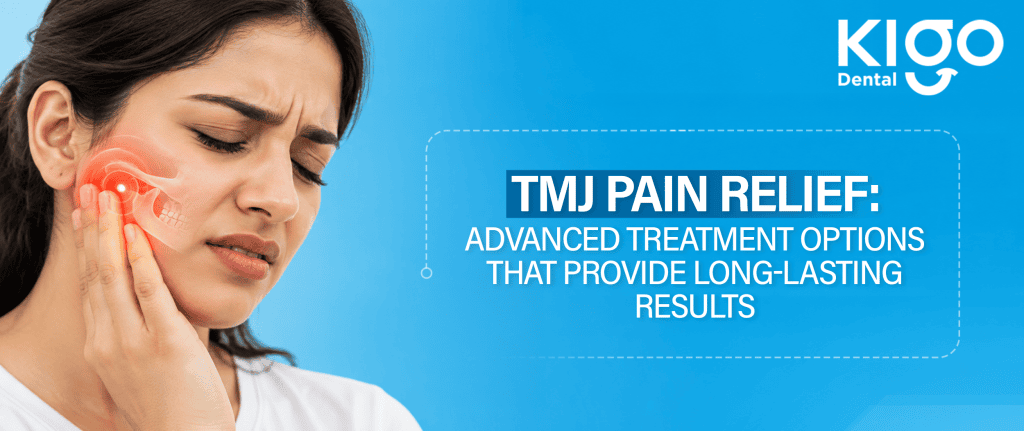
Temporomandibular Joint (TMJ) problems can affect much more than the jaw. Pain around the jaw joint may make it difficult to chew, speak, yawn, or open the mouth comfortably. Some people also experience clicking or popping sounds, headaches, facial discomfort, ear-related symptoms, or stiffness around the jaw.
When these symptoms continue for weeks or become more severe, finding the right TMJ pain relief treatment is important. Modern dentistry offers several advanced approaches that can help manage TMJ disorders and improve jaw function. The right treatment depends on the underlying cause, severity of symptoms, and individual oral health.
At Kigo Dental Clinic patients can receive specialized evaluation and treatment for TMJ-related concerns with a focus on identifying the cause of discomfort and providing personalized care.
What Is TMJ Disorder?
The temporomandibular joints are located on both sides of the face, connecting the lower jawbone to the skull. These joints allow the jaw to move up and down, forward and backward, and from side to side.
When the joint, surrounding muscles, or supporting structures become irritated or do not function properly, it can result in a condition commonly known as TMJ disorder or TMD.
TMJ problems may develop due to several factors, including:
- Teeth grinding or clenching
- Jaw injuries or trauma
- Stress-related muscle tension
- Arthritis affecting the jaw joint
- Poor bite or changes in the way teeth meet
- Excessive strain on the jaw
- Certain structural problems involving the joint
Understanding the underlying cause is an important first step toward effective TMJ treatment.
Common Symptoms of TMJ Problems
TMJ disorders can produce different symptoms from person to person. Some common signs include:
- Jaw pain or tenderness
- Difficulty opening or closing the mouth
- Clicking, popping, or grinding sounds
- Pain while chewing
- Jaw stiffness
- Facial pain
- Headaches or pain around the temples
- Ear discomfort or a feeling of fullness
- Jaw locking
- Pain extending toward the neck or shoulders
Occasional clicking without pain may not always require treatment. However, persistent pain, restricted jaw movement, or locking should be evaluated by a dental professional.
Why Proper Diagnosis Matters
One of the most important aspects of TMJ pain treatment is determining what is causing the symptoms.
Jaw pain can sometimes be related to muscle tension, teeth grinding, inflammation, bite problems, joint damage, or a combination of factors. Treating only the symptom without addressing the underlying cause may provide temporary relief but may not offer long-term improvement.
A TMJ-focused dental evaluation may include a discussion of symptoms, examination of jaw movement, assessment of the bite, evaluation of the teeth and surrounding muscles, and imaging when necessary.
This detailed approach helps the dentist develop a treatment plan based on the patient’s specific condition.
Advanced Treatment Options for TMJ Pain Relief
1. Conservative TMJ Therapy
Many patients can initially benefit from non-invasive approaches. Depending on the condition, treatment may include dietary modifications, jaw exercises, stress management, warm or cold applications, and guidance on reducing excessive jaw movement.
Patients may also be advised to avoid habits such as chewing gum frequently, biting hard objects, or opening the mouth excessively.
These simple measures can reduce stress on the temporomandibular joint and support recovery.
2. Custom Oral Appliances
A custom-made oral appliance may be recommended for patients who clench or grind their teeth, particularly during sleep.
A properly designed appliance can help protect the teeth and reduce excessive forces placed on the jaw. It should be customized based on the patient’s bite and specific requirements rather than using a generic appliance without professional assessment.
For suitable patients, this approach can be an important part of a comprehensive TMJ pain relief plan.
3. Bite and Occlusion Assessment
The way the upper and lower teeth come together can influence jaw function. In certain cases, an uneven or altered bite may contribute to excessive stress on the jaw muscles or joint.
A dentist may evaluate the patient’s occlusion and determine whether dental factors are contributing to the symptoms.
If bite-related issues are identified, treatment can be planned according to the individual situation.
4. Physical Therapy and Jaw Exercises
Specialized jaw exercises and physical therapy can help improve movement and reduce muscle tension in selected cases.
Exercises may focus on controlled jaw opening, relaxation, stretching, and improving coordination of the jaw muscles.
These techniques should ideally be performed under appropriate professional guidance, especially when the patient has significant pain or restricted jaw movement.
5. Medication for Symptom Management
Depending on the patient’s condition, a dental professional may recommend medication to help control pain or inflammation.
Medication is generally used as part of an overall treatment plan rather than as a permanent solution. The appropriate medication and dosage should always be determined by a qualified healthcare professional.
6. Minimally Invasive TMJ Procedures
Some patients with persistent symptoms may require more advanced treatment. Minimally invasive procedures may be considered when conservative approaches do not provide adequate improvement and when the joint condition warrants additional intervention.
The specific procedure depends on the diagnosis and the condition of the temporomandibular joint.
7. Advanced TMJ Treatment for Complex Cases
In more complicated situations, patients may require a combination of treatments. The goal is to restore comfortable jaw function, reduce pain, and address contributing factors.
A personalized treatment approach may combine oral appliances, physical therapy, bite evaluation, lifestyle changes, and other appropriate interventions.
The treatment should always be selected after a proper assessment rather than based solely on symptoms.
How to Achieve Long-Lasting TMJ Pain Relief
Long-term improvement is not only about reducing pain temporarily. It also involves identifying and managing the factors that may be putting continuous stress on the jaw.
Patients can support their treatment by:
- Avoiding unnecessary teeth clenching
- Managing stress and muscle tension
- Eating softer foods during painful episodes
- Avoiding excessive gum chewing
- Following recommended jaw exercises
- Wearing a prescribed oral appliance as directed
- Maintaining regular dental check-ups
- Following the recommended treatment plan consistently
Small daily habits can make an important difference in managing TMJ-related symptoms.
When Should You See a TMJ Specialist?
You should consider professional evaluation if jaw pain continues, becomes worse, or interferes with normal activities.
It is especially important to seek evaluation if you experience:
- Persistent jaw pain
- Difficulty opening your mouth
- Frequent jaw locking
- Pain while eating
- Severe clicking or grinding with discomfort
- Frequent headaches associated with jaw pain
- Facial or ear-area discomfort
- Symptoms that are affecting your quality of life
Early assessment can help identify potential causes and prevent the problem from becoming more difficult to manage.
Why Choose Kigo Dental Clinic?
Choosing a dental clinic experienced in TMJ concerns can make the diagnostic and treatment process more focused.
Kigo Dental Clinic provides specialized dental care for patients experiencing jaw joint and TMJ-related concerns. The approach focuses on understanding the patient’s symptoms, evaluating jaw function, and recommending treatment according to individual needs.
Rather than relying on a single treatment for every patient, personalized care can help address the factors contributing to jaw discomfort.
If you are searching for TMJ treatment in India, TMJ pain relief, or a TMJ specialist, a professional evaluation can help you understand the available treatment options and determine the most suitable approach for your condition.
Final Thoughts
TMJ pain can affect eating, speaking, sleeping, and everyday comfort, but effective treatment is possible for many patients. From conservative care and custom oral appliances to physical therapy and advanced procedures, modern TMJ treatment options can be tailored to individual needs.
The key to long-lasting improvement is identifying the underlying cause rather than simply masking the pain. If you are experiencing persistent jaw discomfort, clicking, stiffness, or difficulty moving your jaw, consider getting a professional evaluation.
For specialized care and personalized guidance, Kigo Dental Clinic can help patients explore appropriate options for managing TMJ-related problems and improving jaw function.
For TMJ pain relief, visit Kigo Dental Clinic, Hyderabad. Call +91 9998884398 for an appointment.