
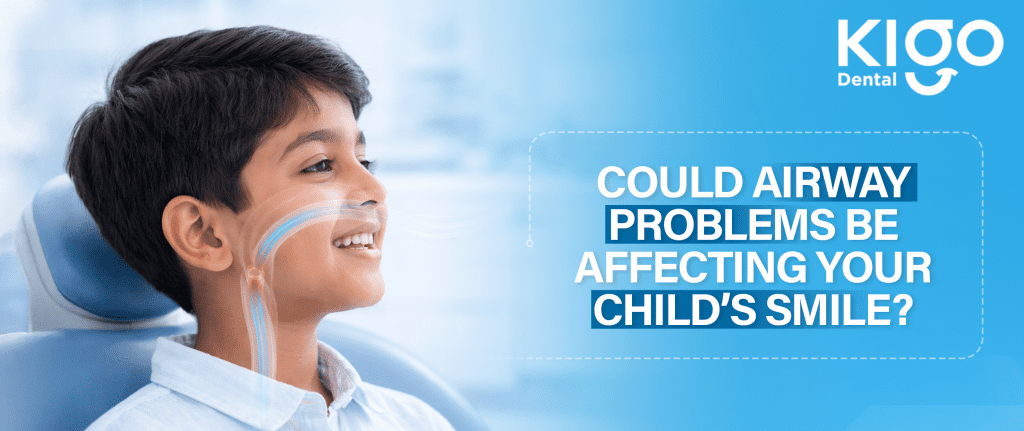
When parents think about their child’s dental health, they usually focus on brushing, cavities, and straight teeth. However, one critical factor often goes unnoticed—airway health. Surprisingly, airway problems can have a significant impact on your child’s smile, facial development, and overall well-being.
In recent years, pediatric dentists and orthodontists have started paying closer attention to how breathing patterns influence oral health. If your child has crooked teeth, mouth breathing habits, or sleep issues, the root cause might be linked to airway problems.
Let’s explore how airway issues can affect your child’s smile and what you can do about it.
What Are Airway Problems in Children?
Airway problems occur when there is a restriction or obstruction in the nasal or oral passages, making it difficult for a child to breathe properly through the nose. Instead, the child may rely on mouth breathing.
Common causes include:
- Enlarged tonsils or adenoids
- Chronic allergies
- Deviated nasal septum
- Nasal congestion
- Poor oral habits
Healthy breathing should ideally be through the nose. Nasal breathing supports proper oxygen intake, filters air, and promotes balanced facial growth.
Why Is Nasal Breathing Important?
Nasal breathing plays a vital role in your child’s overall development. When a child breathes through the nose:
- The tongue rests properly on the roof of the mouth
- The jaw develops correctly
- Facial muscles function in balance
However, when airway issues force a child to breathe through the mouth, it can disrupt this natural development process.
Signs Your Child May Have Airway Problems
Airway issues are not always obvious. Here are some common signs parents should watch for:
1. Mouth Breathing
If your child frequently breathes through their mouth instead of their nose, especially during sleep, it could indicate airway obstruction.
2. Snoring or Noisy Breathing
Regular snoring in children is not normal and may point to restricted airflow.
3. Crowded or Crooked Teeth
Improper tongue positioning due to mouth breathing can lead to narrow dental arches and misaligned teeth.
4. Long or Narrow Face
Airway issues can influence facial growth, leading to a longer, narrower face shape.
5. Sleep Problems
Children with airway issues may experience restless sleep, frequent waking, or even sleep apnea.
6. Dark Circles Under Eyes
Also known as “allergic shiners,” these may be linked to chronic nasal congestion.
7. Difficulty Concentrating
Poor sleep quality caused by airway issues can affect focus, behavior, and academic performance.
How Airway Problems Affect Your Child’s Smile
Airway health and dental development are closely connected. Here’s how airway issues can impact your child’s smile:
1. Improper Jaw Development
When a child breathes through the mouth, the tongue does not rest against the palate. This can result in:
- Narrow upper jaw
- Improper bite alignment
- Underdeveloped facial structure
2. Crooked Teeth
A restricted airway can lead to insufficient space for teeth to erupt properly, causing crowding or overlapping.
3. Open Bite or Overbite
Mouth breathing and poor tongue posture can contribute to bite issues like open bite or excessive overbite.
4. Gum Problems and Dry Mouth
Mouth breathing reduces saliva flow, increasing the risk of:
- Gum inflammation
- Tooth decay
- Bad breath
5. Delayed Facial Growth
Chronic airway issues may affect overall facial harmony and symmetry.
The Role of Airway Dentistry
Airway dentistry is an advanced approach that focuses on identifying and treating the root causes of breathing-related dental problems. Instead of just correcting teeth alignment, it looks at the bigger picture—how breathing, sleep, and oral structures are connected.
Airway-focused dentists evaluate:
- Tongue position
- Jaw development
- Breathing patterns
- Sleep quality
This holistic approach ensures long-term health benefits for your child.
Diagnosis of Airway Issues
If you suspect airway problems, early diagnosis is essential. A dentist or specialist may use:
- Clinical examination
- X-rays or 3D imaging
- Sleep studies (if required)
- Evaluation of oral habits
Treatment Options for Airway Problems
The good news is that airway issues in children can often be treated effectively, especially when detected early.
1. Myofunctional Therapy
This involves exercises that train the tongue and facial muscles to function properly. It helps promote nasal breathing and correct oral posture.
2. Palatal Expansion
A dental appliance may be used to widen the upper jaw, creating more space for proper airflow and tooth alignment.
3. Habit Correction
Breaking habits like thumb sucking or prolonged pacifier use can improve oral development.
4. Treating Allergies or Nasal Issues
Managing allergies or sinus problems can significantly improve breathing patterns.
5. Tonsil or Adenoid Removal
In some cases, enlarged tonsils or adenoids may need to be removed to clear the airway.
6. Orthodontic Treatment
Braces or aligners may be recommended to correct alignment issues caused by airway problems.
Why Early Intervention Matters
Early detection and treatment of airway issues can make a huge difference in your child’s development. Addressing these problems during growth years can:
- Prevent complex orthodontic treatments later
- Improve sleep quality
- Enhance facial development
- Boost confidence with a healthier smile
- Support overall physical and mental health
The earlier the intervention, the better the outcomes.
Tips for Parents
As a parent, you play a key role in identifying potential airway issues. Here are some simple tips:
- Observe your child’s breathing habits (day and night)
- Encourage nasal breathing
- Maintain regular dental check-ups
- Address allergies promptly
- Limit screen time before bed to improve sleep quality
- Consult a specialist if you notice warning signs
When Should You See a Dentist?
You should consider consulting a dentist or airway specialist if your child:
- Frequently breathes through the mouth
- Snores regularly
- Has crowded or misaligned teeth
- Experiences poor sleep or fatigue
- Shows unusual facial growth patterns
Early evaluation can help prevent long-term complications.
Conclusion
Airway problems are often overlooked, yet they play a crucial role in shaping your child’s smile and overall health. From crooked teeth to poor sleep and facial development issues, the effects of airway obstruction can be far-reaching.
The good news is that with early diagnosis and the right treatment approach, these issues can be effectively managed. By focusing on airway health, you’re not just improving your child’s smile—you’re enhancing their quality of life.
If you notice any signs of airway problems, don’t wait. A timely consultation with a dental or airway specialist can make all the difference in ensuring your child grows up with a healthy, confident smile.
Airway problems affecting your child’s smile? Visit Kigo Dental Clinic—call +91 99988 84398.